
EMPATHY MAP CANVAS
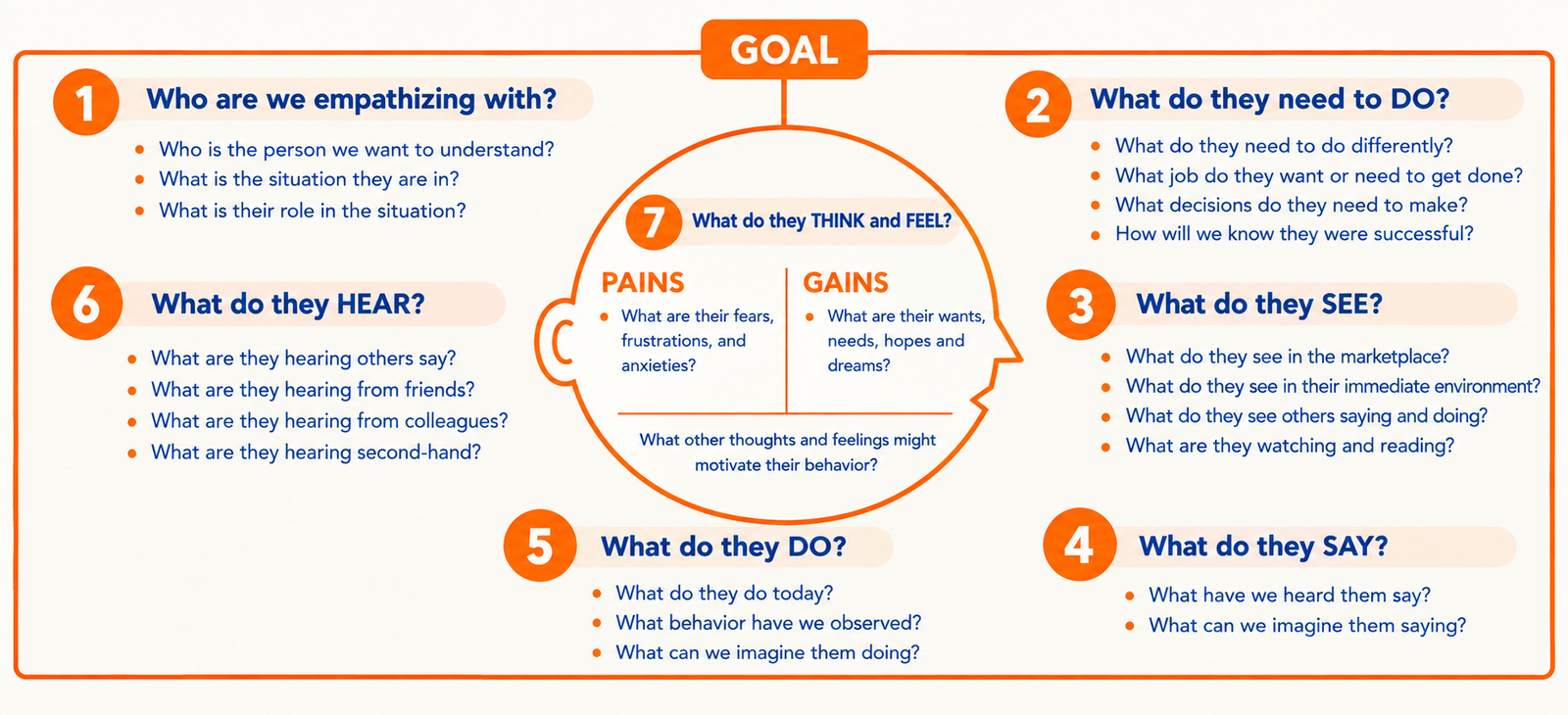
Discover what drives your users, identify their pain points, and build solutions around what truly matters to them.
PROBLEM FRAMING CANVAS
1. What is the Problem?
2. Is there a problem behind the problem?
3. WHY?
- Why was this product/solution designed?
- Why would this be preferred over others?
WHAT?
- What makes the product/solution a need of the hour?
- What makes it different from the rest?
WHERE?
- Where will it be the most relevant?
- Where do users face most friction?
WHO?
- Who would find it the most useful?
- Who would not use it?
WHEN?
- When should it be launched?
HOW?
- How do we scale?
- How do we execute?
4. Reframe the problem with new insights. How can we...?
5. What does success look like?
A structured canvas to explore the problem from multiple perspectives, uncover the needs behind it, and define a clear path toward meaningful solutions.
THE VALUE PROPOSITION CANVAS
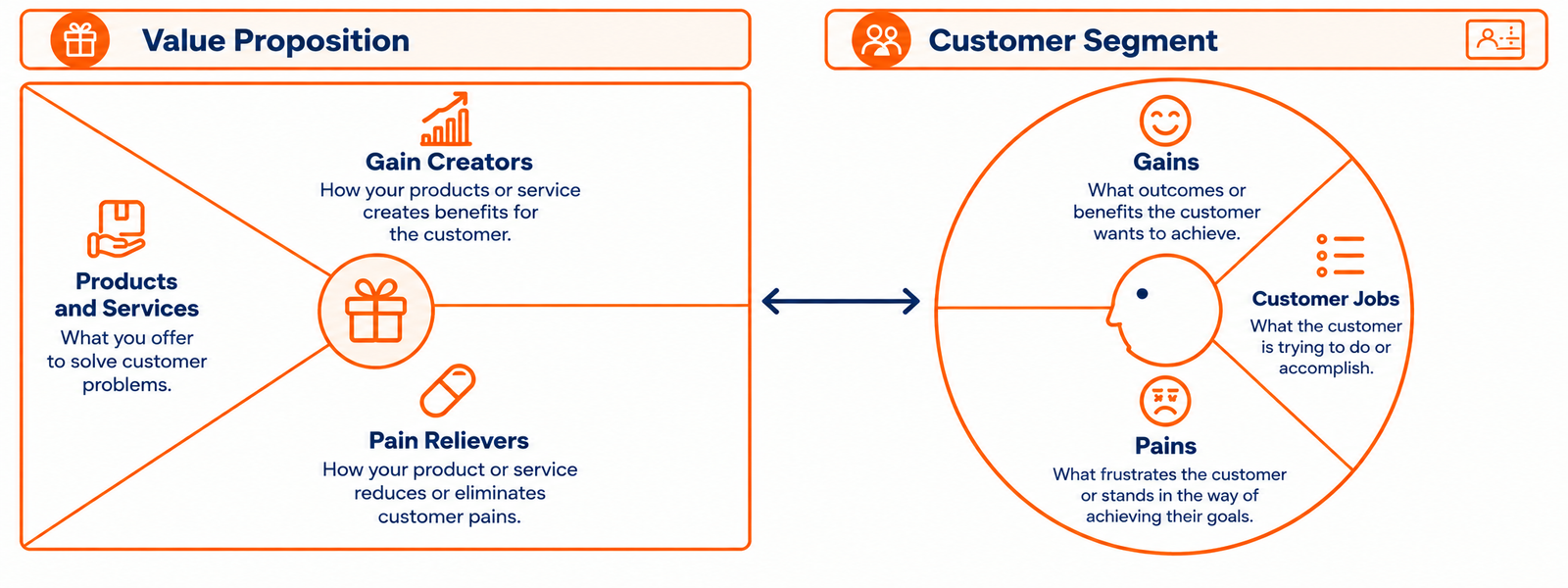
Value Proposition Canvas — Align what you offer with what your customers truly need, value, and care about.
CUSTOMER JOURNEY MAP
See the journey. Understand the experience. Improve what matters.
& ADVOCACY
ACTIVITIES
options
choices
the product
recommend
GOALS
what's available
best option
quickly & confidently
when promised
make it easy to return
Social Media
Reviews, Chat
Checkout
Product, Support
Social Media
EXPERIENCE
Frustrated
GOALS
Awareness
Consideration
Conversions
Satisfaction
Retention &
Advocacy
Visualize every stage of the customer experience—from awareness to loyalty. Identify customer activities, goals, touchpoints, emotions, and business outcomes to uncover opportunities for a more seamless and impactful customer journey.
SERVICE BLUEPRINT
Example: Hotel Check-In Experience
1. ARRIVAL
Guest arrives
at the hotel
2. BOOKING DETAILS
Guest provides
booking details
3. CHECK-IN FORMALITIES
Guest completes
ID verification & payment
4. ROOM KEY HANDOVER
Guest receives
room key
5. TO THE ROOM
Guest heads to
their room
USER
ACTIONS
(Visible to Guest)
ACTIONS
(Behind the Scenes)
PROCESSES
(Enablers)
Identify the Root Cause of Issues
If the guest faces a delay at check-in, the blueprint helps us find the real cause: Housekeeping delay? System not updated? Communication gap? Room assigned too early?
Fix the System, Not Just the Symptom
Improve what the guest experiences by improving what happens behind the scenes.
Map the complete service ecosystem, trace the root causes behind customer experiences, and identify opportunities to improve the system—not just the symptoms.
SCAMPER
LOOK AT YOUR IDEA FROM A FRESH ANGLE
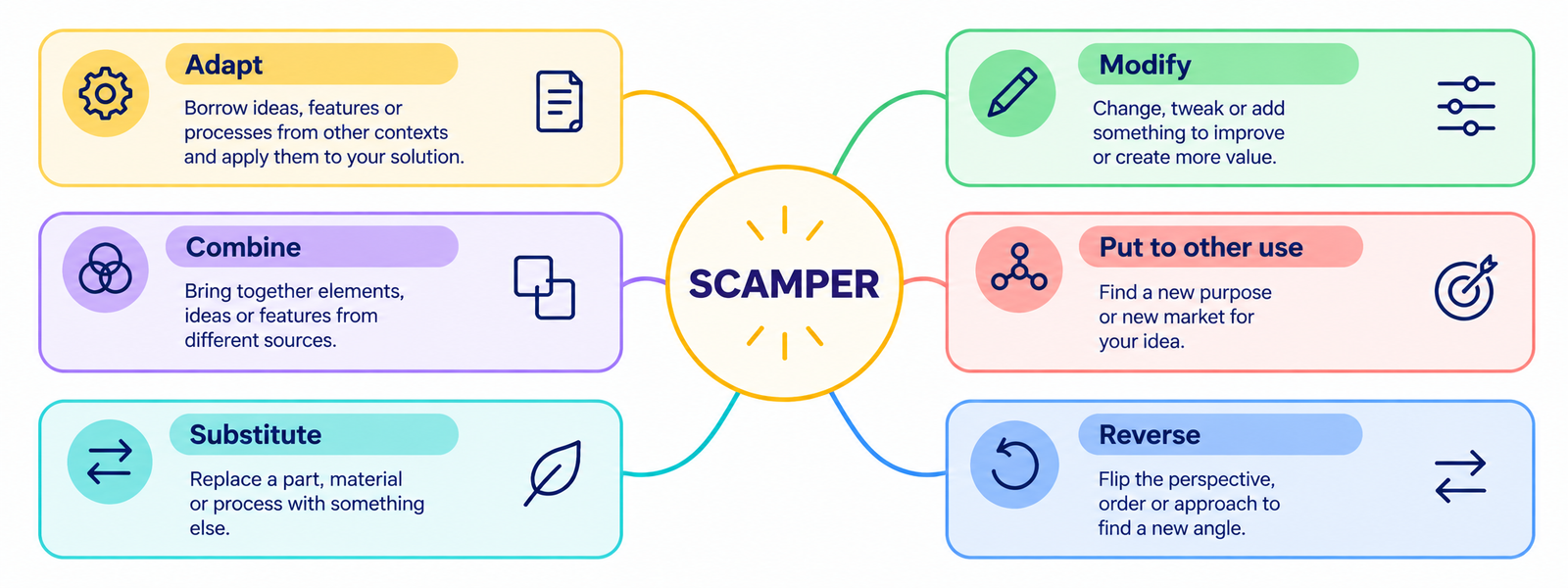
Transform existing ideas into new possibilities by questioning, reshaping, combining, and looking at them from a fresh perspective.
Six Thinking Hats
Facts & Information
Focus on data, evidence, and what we know objectively.
Emotions & Intuition
Express feelings, hunches, and gut reactions without justification.
Critical Judgment
Identify risks, weaknesses, and potential problems.
Optimism & Benefits
Explore possibilities, opportunities, and positive outcomes.
Creativity & Alternatives
Generate new ideas, solutions, and different perspectives.
Process Control
Manage the thinking process, set agendas, and ensure focus.
Six Perspectives. One Clearer Decision - A practical framework for exploring facts, emotions, risks, opportunities, creativity, and process—helping teams make clearer, more balanced decisions.
Elephants in the Room
Three elephants. One bigger picture.
The Ignored Elephant
Something everyone knows is a problem,
but nobody wants to address.
What it looks like /
feels like
concerns
beneath the surface
Example in the
workplace
manager behaviour
The Imagined Elephant
An assumption or story we've created
about what a problem is, without
really testing it.
What it looks like /
feels like
narrative
or labels
opportunities to ask
Example in the
workplace
committed."
more perks."
they actually need
from the workplace.
The Invisible Elephant
Something that has become so normalised
that people have stopped noticing
or questioning it.
What it looks like /
feels like
Example in the
workplace
speaking up
less challenging
things work here."
Elephants in the Room Uncover what’s being ignored, assumed, or left unsaid—and turn it into a conversation your team can act on.
TRANSFORMATIONAL
Developing breakthroughs
and inventing things for
markets that don't yet exist
ADJACENT
Expanding from
existing business
into “new to the
company” business
CORE
Optimizing existing
products for existing
customers
AND ASSETS
PRODUCTS AND ASSETS
AND ASSETS
A strategic tool for identifying and balancing growth opportunities across existing markets, adjacent spaces, and new-to-the-world opportunities
Quick Wins
Major Projects
Fill ins
Thankless tasks
Impact vs. Effort Matrix- Prioritize the right work by balancing potential impact with the effort required—so your team knows what to act on, invest in, or let go.